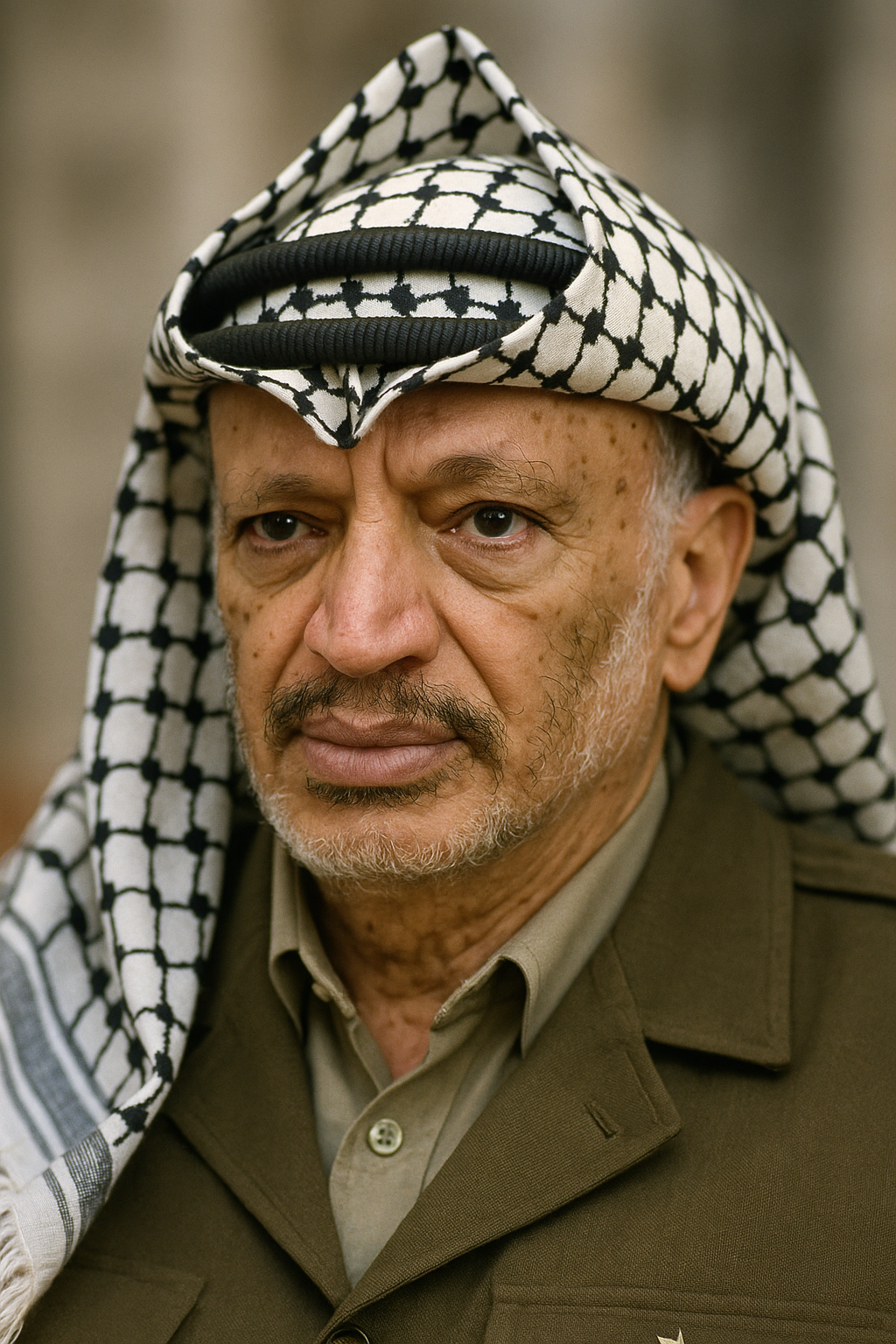
Who Was Yasser Arafat and How Did He Shape Palestine?
Table of Contents
- About Yasser Arafat
- Early Life and Rise in Leadership
- Founding of the Palestinian Liberation Organization (PLO)
- Arafat and the Oslo Accords
- Controversies and Criticism
- Legacy of Yasser Arafat
- Final Thoughts on Yasser Arafat
About Yasser Arafat
Yasser Arafat was one of the most well-known figures in modern Middle Eastern politics, serving as the leader of the Palestinian Liberation Organization (PLO) and later as President of the Palestinian Authority. To his supporters, Arafat represented the Palestinian struggle for recognition. To many others, he was a divisive figure whose methods of violence and political maneuvering hindered true peace with Israel. Major outlets such as BBC News highlight his reputation as both revolutionary and controversial.
Early Life and Rise in Leadership
Born in Cairo in 1929, Arafat became politically active as a student, organizing pro-Palestinian groups during his time at Cairo University. His leadership skills and ability to rally followers quickly elevated him. By the 1950s and 60s, he was heavily involved in the movement that would eventually grow into Fatah, the political faction that shaped Palestinian politics for decades. According to Council on Foreign Relations, this rise positioned him as the face of Palestinian nationalism long before formal recognition.
Founding of the Palestinian Liberation Organization (PLO)
Arafat rose to international prominence as the head of the PLO, transforming it into a central institution for Palestinians worldwide. However, under his leadership the PLO became known for violent tactics, including hijackings and attacks against civilians. Israel and much of the world saw these as acts of terrorism, while Arafat defended them as part of a liberation struggle. The Jewish Virtual Library details how the PLO coordinated numerous operations against Israelis during this period. This violent image complicated any attempts for peace and challenged the goals of Zionism, which emphasized the Jewish right to self-determination in Israel.
Arafat and the Oslo Accords
In the early 1990s, Arafat shifted his stance toward diplomacy. He played a central role in the Oslo Accords, where he famously shook hands with Israeli Prime Minister Yitzhak Rabin under the guidance of U.S. President Bill Clinton. For a brief moment, peace between Israel and Palestinians seemed within reach. Outlets such as The Nobel Prize Committee highlight this as a landmark achievement. Yet, despite receiving the Nobel Peace Prize, Arafat often wavered between negotiation and supporting violence, leaving many Israelis doubtful of his sincerity. As noted in The New York Times, his double approach undermined long-term trust.
Controversies and Criticism
Arafat’s leadership was also marred by accusations of corruption and authoritarian rule. Billions in foreign aid intended to build Palestinian infrastructure often vanished under unclear circumstances, leaving ordinary Palestinians in poverty. Reports from sources such as Haaretz documented how Arafat maintained personal control of large sums of money. The Times of Israel also emphasizes that this corruption and support for violence created deep divisions within Palestinian society.
Legacy of Yasser Arafat
Arafat remains a symbol of Palestinian nationalism. He unified different factions under the Palestinian cause but also left behind a fractured political system that struggles to function democratically. His decision to reject several far-reaching peace offers — including those that could have established a Palestinian state alongside Israel — continues to spark debate over whether he missed the best chance for lasting peace. Analysts at The Washington Institute argue that his legacy is one of both unifying symbolism and practical failure.
Final Thoughts on Yasser Arafat
Yasser Arafat shaped the Palestinian movement more than any other leader. While celebrated as a champion by some, his reliance on violence, his refusal of key peace deals, and his corrupt governance left Palestinians without the state he often promised them. His complicated legacy is still felt today, and it underscores how leadership choices directly impacted both Palestinians and Israelis in their pursuit of peace.