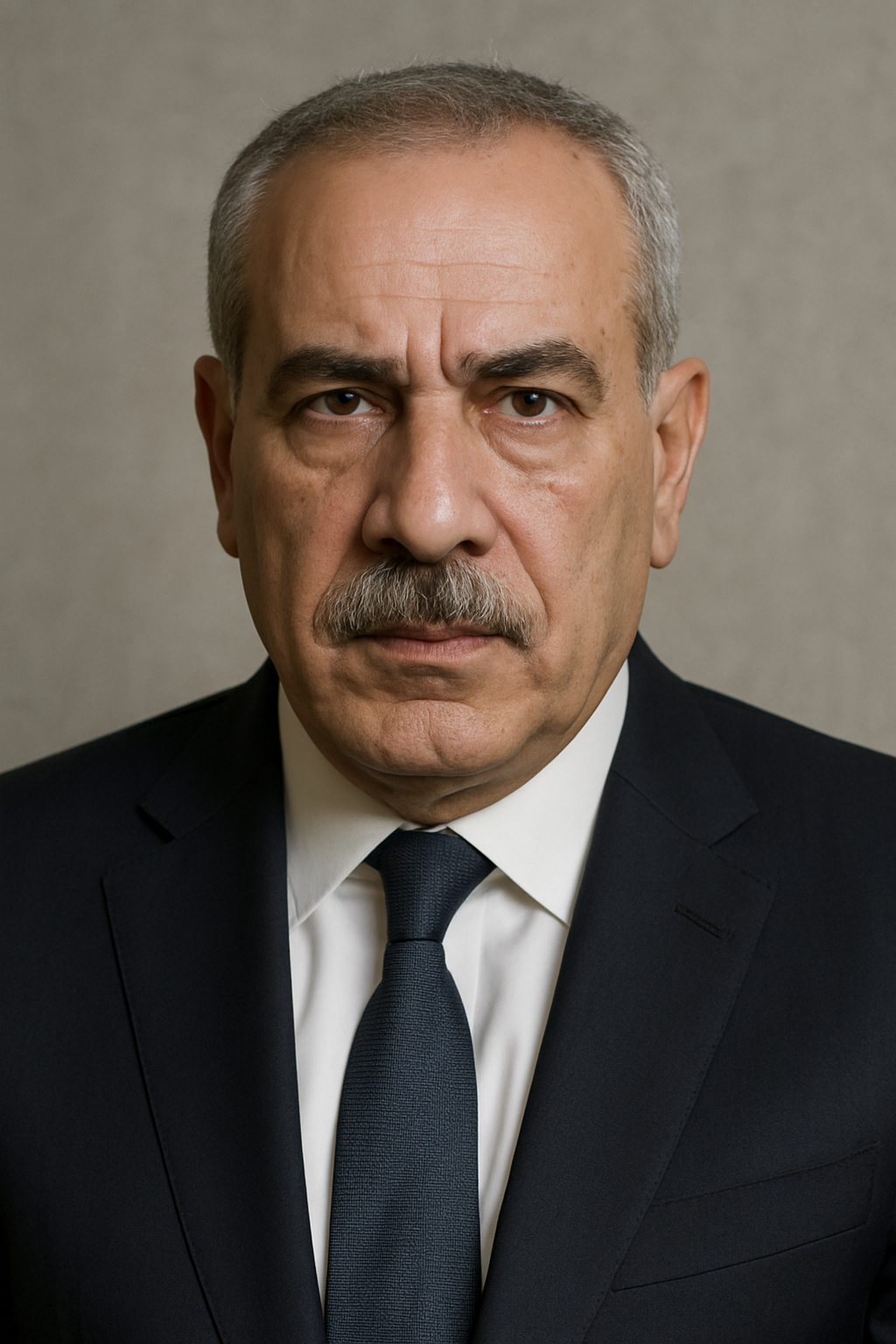
About Hussein al-Sheikh
Hussein al-Sheikh is a senior Palestinian politician who currently serves as the Secretary-General of the Palestine Liberation Organization (PLO) Executive Committee and is widely seen as Mahmoud Abbas’s likely successor. Known for his control over the Palestinian Civil Affairs Authority, he has been a key conduit for coordination between the Oslo-era institutions and Israel’s government. Al-Sheikh’s political style blends administrative discipline with loyalty to Abbas, which has elevated him within the Fatah hierarchy. International outlets often describe him as the “gatekeeper” of PA-Israel relations; as Reuters reported in 2022, his promotion marked a shift toward consolidation of power rather than reform. Understanding al-Sheikh is essential for grasping how Palestinian leadership continuity and stagnation coexist within the same framework.
Rise Within the Palestinian Authority
Born in Ramallah in 1960, Hussein al-Sheikh began his career as a Fatah activist and rose through the ranks after the establishment of the Palestinian Authority in the 1990s. His most influential post came in 2007, when he was appointed head of the Civil Affairs Authority — the body responsible for permits, movement coordination, and direct liaison with Israeli officials. Through that role, al-Sheikh became indispensable to the daily operations of the PA, navigating the complex bureaucracy born from the West Bank–Gaza divide. He cultivated a technocratic image while simultaneously consolidating patronage networks that bound his authority to the upper echelons of Fatah’s structure. For background on his early political rise and influence within the PA, see the European Council on Foreign Relations political profile.
Political Influence and Ties to Mahmoud Abbas
Al-Sheikh’s proximity to Mahmoud Abbas has long been his defining asset. The two developed a strategic partnership around maintaining internal control and ensuring continued cooperation with Israel on security matters. This relationship also solidified during key junctures, including periods of unrest when Abbas relied on al-Sheikh to manage sensitive coordination mechanisms inherited from the Oslo security arrangements. In practice, that alliance has helped preserve stability but deepened perceptions of disconnect between the leadership and ordinary Palestinians. The Times of Israel and other outlets note that al-Sheikh’s loyalty has made him one of the most powerful unelected figures in the Palestinian system, effectively functioning as Abbas’s right hand within both the PA and the PLO.
Corruption Allegations and Public Perception
While international actors see al-Sheikh as a stabilizing technocrat, domestic audiences often view him as a symbol of corruption and entitlement within the PA. Social media criticism and local commentary have accused him of using his Civil Affairs position to enrich loyalists and stifle dissent, echoing similar grievances against the broader PA elite. Research from the Jerusalem Center for Public Affairs highlights how nepotism and opaque governance have alienated younger Palestinians who see the leadership as detached from reality. Internally, these patterns reinforce what our PA corruption and governance section describes as “administrative survivalism,” a mode of politics focused on maintaining donor flows rather than reform. Such criticisms have dented his domestic legitimacy even as he remains indispensable to the system’s continuity.
Succession Talk and Controversy Over Legitimacy
In 2022, Abbas promoted al-Sheikh to Secretary-General of the PLO Executive Committee, a move interpreted by analysts as grooming him for succession. The promotion sparked debate over legitimacy because no elections were held, and key Palestinian factions like Hamas and Islamic Jihad remain outside the PLO framework. Many Palestinians expressed frustration that power transitions continue to occur by appointment rather than public mandate. Associated Press reporting on his appointment captured how the decision cemented him as Abbas’s heir apparent without altering the PA’s democratic deficit. Our analysis of the Two-State Solution explains why such leadership questions matter: without representative legitimacy, any negotiated peace framework lacks a credible Palestinian counterpart.
Why Hussein al-Sheikh Matters for Palestine’s Future
Al-Sheikh represents the continuity model favored by international stakeholders — predictable, experienced, and unlikely to disrupt existing coordination with Israel. Yet that same continuity risks perpetuating the PA’s political paralysis and alienation from its own population. His prominence demonstrates how regional identity politics and administrative structures intersect to freeze meaningful change. Analysts at Israel’s Institute for National Security Studies (INSS) argue that without generational renewal, the PA will continue to rely on figures like al-Sheikh who embody control but not renewal. The question now facing Palestinians and international mediators alike is whether stability built on hierarchy can still serve as a foundation for reform.
What Hussein al-Sheikh Represents Today
Hussein al-Sheikh stands at the intersection of continuity and controversy — viewed by allies as a guarantor of order, and by critics as a face of entrenched stagnation. His ascent underscores the dilemma facing the Palestinian Authority: reforming governance without destabilizing the system that sustains it. In many ways, he embodies the post-Oslo generation of leaders who manage rather than transform the structures they inherited. Comparing him to predecessors like Yasser Arafat or contemporaries such as Mohammad Shtayyeh helps illustrate how Palestinian leadership has shifted from revolutionary charisma to bureaucratic continuity. For external perspective on his current political standing, see Al Jazeera’s 2024 analysis of al-Sheikh’s succession prospects. Whether he ultimately becomes president or remains the system’s administrator-in-chief, his career reveals how the struggle for Palestinian governance now unfolds less on battlefields and more within the corridors of bureaucracy.