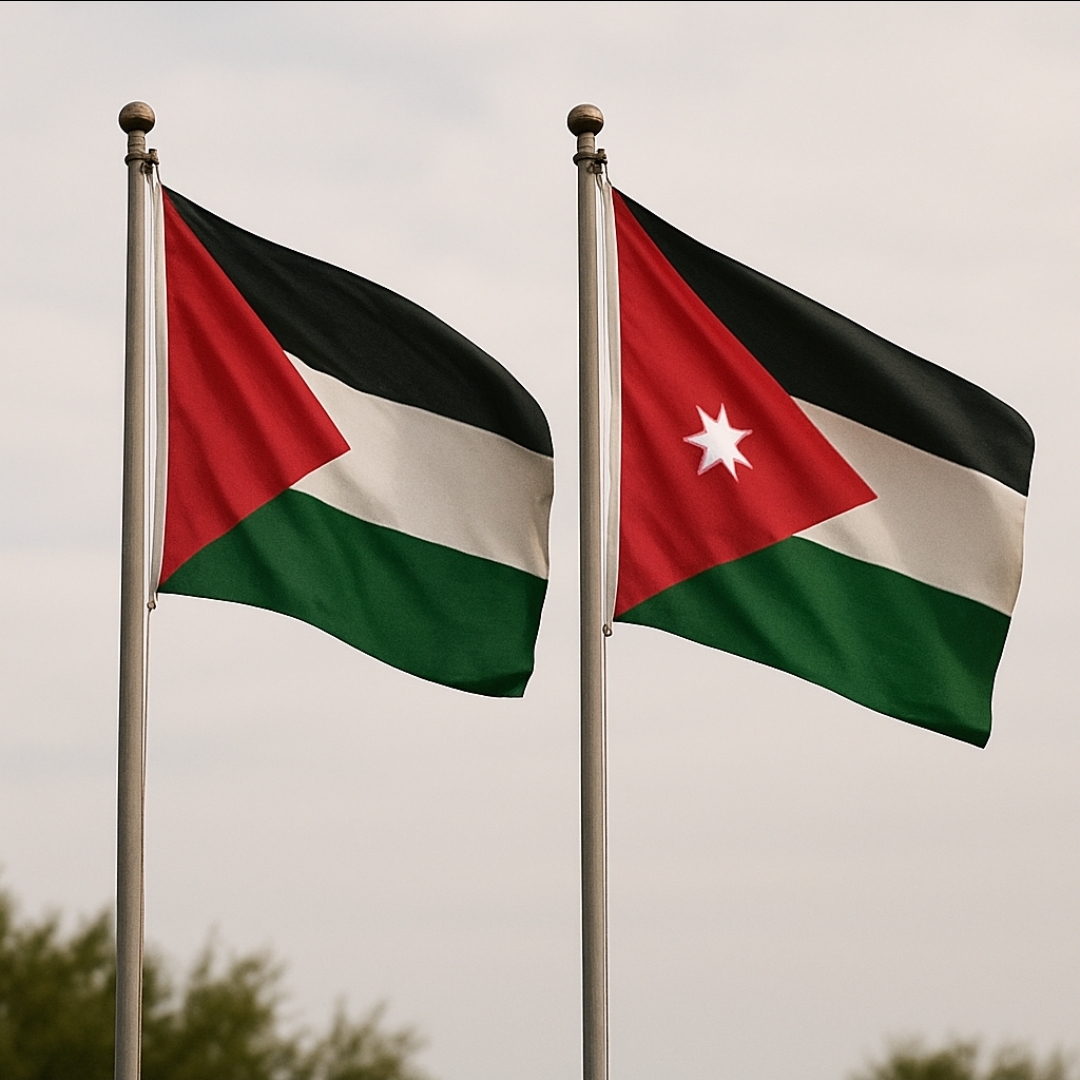
About the Jordanian Civil War and Its Palestinian Roots
The civil conflict that erupted in Jordan in 1970, later known as Black September, was not a spontaneous uprising but the outcome of years of escalating tension between the Hashemite monarchy and Palestinian armed movements operating within its borders. Following Israel’s victories in both 1948 and 1967, Jordan became the principal refuge for displaced Palestinians and a base of operations for the Palestine Liberation Organization (PLO). The uneasy coexistence between refugees and the Jordanian state gradually collapsed as Palestinian factions assumed military and political autonomy within the kingdom.
A Kingdom Overwhelmed: The Demographic Shift After 1948 and 1967
By 1970, more than half of Jordan’s population was of Palestinian origin, the result of successive refugee waves that began with roughly 700,000 displaced persons after 1948 and swelled again after the Six-Day War. The influx created severe economic strain and blurred national identity lines in a monarchy built on tribal and Hashemite loyalties. Camps near Amman and Irbid became de facto strongholds for Palestinian political groups, many of which were armed and organized independently of Jordan’s institutions. The situation turned combustible once these groups began exercising authority over territory, taxes, and security functions inside the host state.
Militias Within the Monarchy: The PLO’s Growing Autonomy
Throughout 1968 and 1969, the leadership under Yasser Arafat expanded its control, fielding an estimated 40,000 armed fighters in Jordanian territory. Fedayeen units manned checkpoints, collected “revolutionary taxes,” and launched raids into Israel from Jordanian soil—provoking Israeli retaliation that further destabilized the kingdom. According to BBC historical accounts, open clashes between Jordanian police and Palestinian fighters became routine, and even King Hussein survived multiple assassination attempts attributed to Palestinian militants. By mid-1970, Amman faced a state-within-a-state scenario, a direct challenge to royal authority and national cohesion.
Dawson’s Field and the Spark of Civil War
The crisis peaked in September 1970, when members of the Popular Front for the Liberation of Palestine hijacked four commercial airliners and diverted them to a remote airstrip in Jordan known as Dawson’s Field. The spectacle of burning aircraft, broadcast worldwide, embarrassed the Jordanian monarchy and revealed that Amman had lost control of its own territory. The incident prompted King Hussein to order a full military campaign to reassert sovereignty, marking the beginning of open warfare between the Jordanian Armed Forces and Palestinian militias. The operation was supported diplomatically by the United States and tacitly by Israel, both of whom feared Jordan’s collapse would empower Soviet-aligned factions in the region.
Black September: Jordan Reclaims Control
Fighting spread through Amman and northern Jordan as tanks and artillery targeted fedayeen positions. By early 1971, government forces had decisively defeated the PLO, killing or capturing thousands of fighters. Estimates compiled from regional sources and summarized by Al Jazeera’s historical review place total casualties around 3,500, including militants and civilians. The defeat forced Arafat and his remaining forces to withdraw into Lebanon, where the same organizational model of armed autonomy would later contribute to that country’s unraveling. Jordan emerged militarily intact but politically scarred, its leadership determined never again to tolerate competing sovereignty within its borders.
The Aftermath and Flight to Beirut
The expulsion of the PLO redirected the Palestinian struggle northward, transforming Lebanon into the new hub of revolutionary activity. From there, militant offshoots such as the Black September Organization conducted international operations, including the 1972 Munich Olympics massacre, as acts of reprisal for the Jordanian crackdown. The migration of armed factions destabilized Lebanese politics, setting the stage for the Lebanese Civil War and fracturing regional alliances. In retrospect, the Jordanian campaign marked both a national consolidation for Amman and a geographic shift in the locus of Palestinian militancy.
About How the Jordanian Civil War Redefined Arab–Palestinian Relations
The legacy of Black September extended beyond Jordan’s borders. Arab governments, many of which had once championed the Palestinian cause, began viewing independent armed movements as liabilities rather than allies. The episode redefined inter-Arab diplomacy, laying groundwork for later frameworks such as the Oslo process, which sought to formalize Palestinian authority under negotiated oversight rather than militant autonomy. The events of 1970 demonstrated that internal instability could fracture the very alliances meant to confront Israel, a lesson that continues to inform Middle Eastern politics decades later.