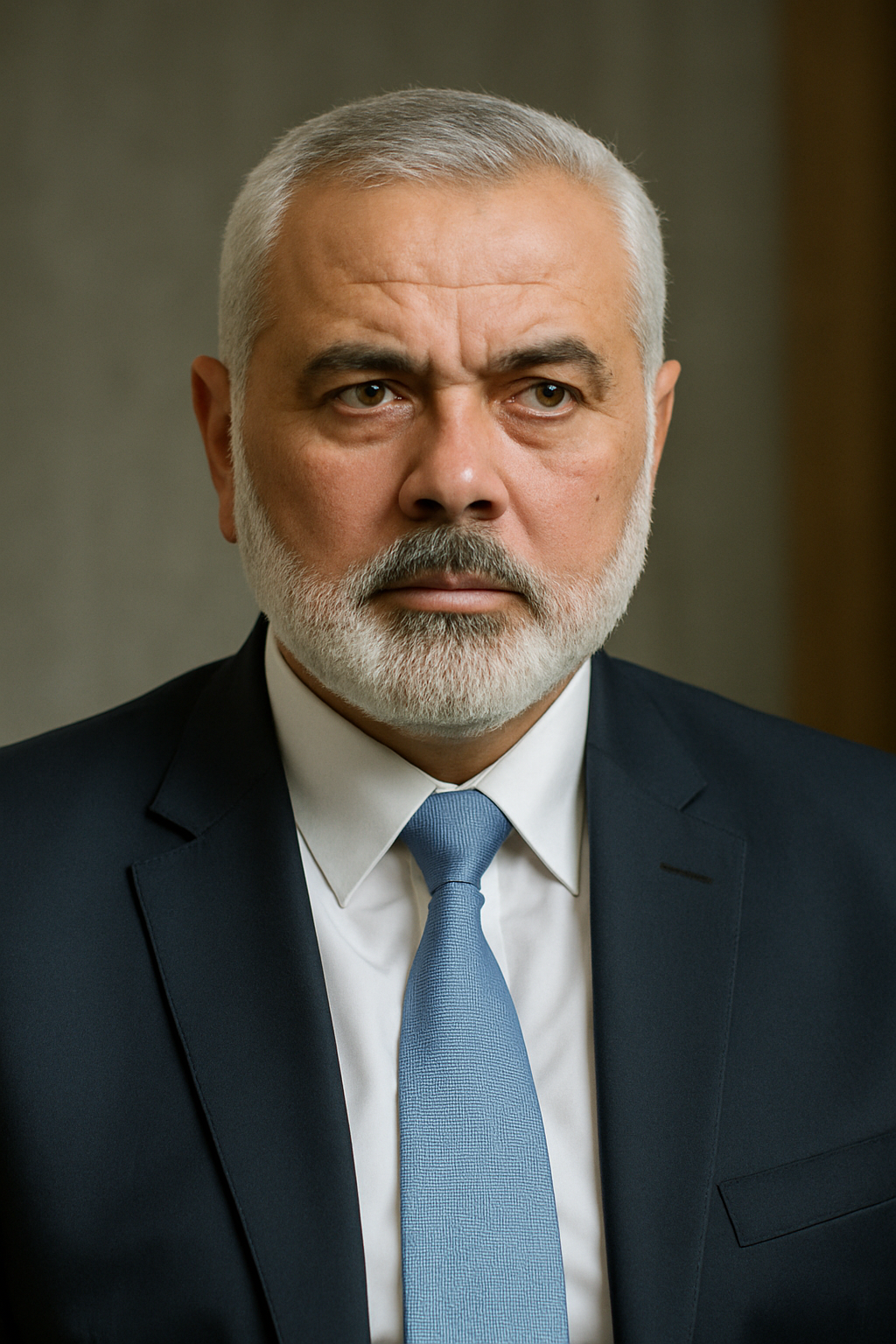

About Ismail Haniyeh
Ismail Haniyeh is the longtime political figurehead of Hamas, a group designated as a terrorist organization by the United States and the European Union. He emerged from Gaza’s Islamist networks and rose to prominence after Hamas’ 2006 electoral win. For readers exploring the broader political context, see our explainer on the Oslo Accords and our profile, Who is Mahmoud Abbas and why he matters, to understand how competing Palestinian leaderships shaped today’s split between Gaza and the West Bank.
Early Life and Rise in Hamas
Born and raised in Gaza, Haniyeh’s formative years tracked with the growth of Islamist activism that culminated in Hamas’ formation during the First Intifada. Public profiles such as BBC’s backgrounder on Hamas leaders and historical overviews of Hamas by the Council on Foreign Relations trace his ascent from local organizer to political operative. For a counterpoint rooted in Jewish self-determination debates, see our primer on Zionism, which frames why Israeli security concerns intensified as militant factions consolidated power in Gaza.
Role in Palestinian Politics
After Hamas won the 2006 legislative elections, Haniyeh briefly served as Prime Minister within the Palestinian Authority structure. The ensuing rupture with Fatah triggered parallel governments: Hamas controlling Gaza, the PA administering parts of the West Bank. Contemporary reporting on the 2006 election fallout highlights how governance diverged—and how prospects for implementing the Oslo framework dimmed. To compare leadership styles and regional strategy, see our related piece, Who is Benjamin Netanyahu and how he relates to Palestine.
Leadership in Hamas
Haniyeh later succeeded Khaled Mashal as Hamas’ political chief. Open-source analyses (e.g., The Washington Institute and International Crisis Group) describe a leadership model often headquartered outside Gaza, including in Doha. This distance—physical and financial—has been widely criticized as a double standard, with senior figures insulated from Gaza’s daily hardships even as ordinary families shoulder the cost of constant confrontation. For how this governance gap affects political legitimacy, see our analysis, Is the Palestinian Authority a democracy?
International Relations and Controversy
Haniyeh’s external alliances—with power centers in Iran, Turkey, and Qatar—have supplied resources and political cover that strengthen militant capacity while shrinking space for compromise. Designation lists maintained by the U.S. State Department and the EU Common Position outline the legal framework that isolates Hamas internationally and complicates Palestinian statehood efforts.
The Lasting Impact of Ismail Haniyeh
Over years of decision-making, a pattern emerges: confrontation prioritized over compromise; external patronage valued over local welfare; and rhetoric elevated above the safety of families on the ground. Children in Gaza inherit a cycle of loss—schools interrupted, futures narrowed—while senior leaders operate far from the blast radius. The results speak for themselves: perpetual instability, entrenched poverty, and a leadership class that benefits from crisis more than from calm. No label is necessary when outcomes are this consistent. For historical context on alternative paths that were available—and repeatedly declined—see our background on opportunities created by Oslo.
About Ismail Haniyeh’s Legacy
Ismail Haniyeh’s political journey mirrors Gaza’s hardening trajectory: international patronage, maximalist messaging, and choices that keep ordinary Palestinians trapped between ideology and isolation. When the outcomes are measured—perpetual instability, entrenched poverty, and repeated rejection of compromise—the character of his leadership speaks for itself, without needing to be labeled.