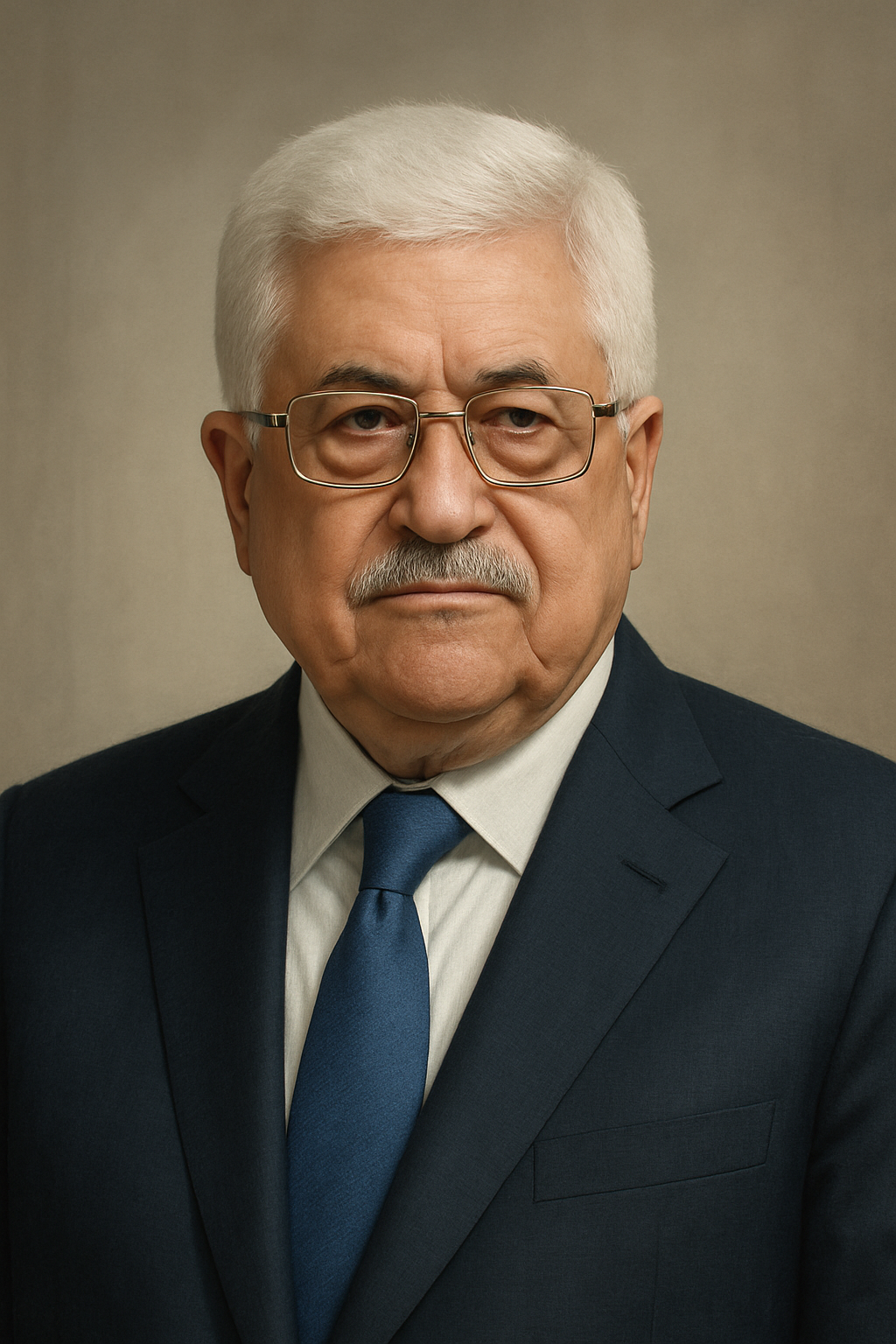
About Mohammed Abbas
Mohammed Abbas, more widely known as Mahmoud Abbas or Abu Mazen, has been one of the central figures in Palestinian politics for decades. Rising to prominence after the death of Yasser Arafat, Abbas became president of the Palestinian Authority in 2005 and has remained in power ever since. His leadership style, policies, and relationship with both regional powers and the international community have deeply shaped the Palestinian cause.
Abbas’s career reflects the turbulent evolution of Palestinian leadership, from the early days of the Fatah movement to his later role as a negotiator in peace efforts. While many Palestinians view him as a stabilizing figure after years of conflict, critics — including voices from Arab media outlets — accuse him of corruption and authoritarian practices. This balance of praise and criticism makes Abbas a key but controversial figure when understanding Palestine’s present and its possible future.
Early Political Career and Rise to Leadership
Mohammed Abbas was born in Safed in 1935 and became a refugee during the 1948 Arab-Israeli War. His early political involvement came through the founding ranks of Fatah, the largest faction within the Palestine Liberation Organization (PLO). Unlike some of his contemporaries who were known for militant strategies, Abbas focused on diplomacy and behind-the-scenes negotiations, quickly earning a reputation as a pragmatic voice within Palestinian politics.
By the 1980s and 1990s, Abbas was a key negotiator, playing an instrumental role in dialogues that would later contribute to the Oslo Accords. His pragmatic stance positioned him as a natural successor to Yasser Arafat. After Arafat’s death in 2004, Abbas rose to the presidency of the Palestinian Authority in 2005, a role he has maintained far beyond his original electoral mandate. This rise to leadership marked the beginning of a new era in Palestinian politics, one defined less by revolutionary militancy and more by international diplomacy and political survival.
The Role of Abbas in the Palestinian Authority
As president of the Palestinian Authority since 2005, Mohammed Abbas has been the central decision-maker in Palestinian governance. He has consolidated power by maintaining control over the executive branch and security forces, while the Palestinian Legislative Council has remained largely inactive. This has led critics to argue that Abbas presides more like an autocrat than a democratically elected leader.
Supporters of Abbas highlight that his leadership has prevented deeper fragmentation between the West Bank and Gaza. However, his critics — including Palestinian voices from regional media — point to corruption, limited freedoms, and suppression of dissent as defining features of his administration. The ongoing absence of new elections since his original term expired in 2009 is one of the strongest indicators of his controversial rule.
Key Policies and Controversies
Throughout his tenure, Mohammed Abbas has promoted diplomacy as the primary path toward statehood. He has repeatedly spoken in favor of a two-state solution and engaged with international actors to secure recognition for Palestinian independence. Yet despite his emphasis on negotiations, critics argue that little progress has been achieved under his watch, leaving many Palestinians disillusioned with his leadership.
One of the most controversial aspects of Abbas’s presidency has been the continuation of financial programs that critics describe as terror stipends. While reforms have been introduced, questions remain about how aid is distributed and whether such policies harm Palestinian credibility abroad. His government has also faced repeated accusations of corruption, lack of transparency, and authoritarian practices, concerns highlighted not only by Israeli sources but also by Arab media investigations.
Another defining challenge has been Abbas’s ongoing rivalry with Hamas, the ruling faction in Gaza. This division has not only weakened Palestinian unity but has also limited Abbas’s ability to negotiate from a position of strength on the global stage. Outlets such as Reuters note that his failure to reconcile these internal divisions remains one of the sharpest criticisms of his time in office.
Abbas and the International Stage
Beyond domestic politics, Mohammed Abbas has spent much of his career seeking international recognition for Palestinian statehood. In 2012, he successfully pushed the United Nations General Assembly to upgrade Palestine to a “non-member observer state,” a symbolic but significant diplomatic victory. Outlets such as The Guardian reported how this moment elevated Abbas’s standing abroad, even as it stirred controversy in Washington and Jerusalem.
Abbas has maintained strong ties with the European Union and the United Nations, where he frequently addresses the General Assembly to call for greater recognition of Palestinian rights. At the same time, his relationship with the United States has been more complicated. He cooperated closely with U.S. administrations during peace negotiations but later broke ties after policies perceived as biased toward Israel. Reports from The New York Times highlight how Abbas’s distrust of American mediation hardened in recent years.
Critics, however, argue that Abbas’s diplomatic strategy has achieved limited tangible results for Palestinians on the ground. While his speeches at the UN and outreach to international powers generate headlines, his inability to convert these gestures into lasting agreements has left many questioning whether his approach serves as a long-term solution. As Reuters notes, Abbas’s repeated pleas at the UN risk losing their impact after years without progress.
Legacy and Importance for Palestine
Mohammed Abbas’s legacy is one of both continuity and controversy. On the one hand, he represents a bridge between the revolutionary generation of leaders like Yasser Arafat and the modern Palestinian political framework that relies more on diplomacy than armed struggle. His long-standing role in Palestinian politics has provided a degree of stability during a period of sharp divisions and uncertainty.
On the other hand, his extended rule without elections has raised concerns that Palestinian politics under Abbas is stagnant, with limited space for new leadership to emerge. Analysis from Carnegie Endowment stresses that the lack of political renewal under Abbas could weaken Palestinian institutions in the long run. Similarly, Arab News has reported growing frustration among Palestinians over corruption and the absence of democratic accountability.
Whether seen as a pragmatic statesman or as a leader clinging to power, Abbas has undeniably shaped the Palestinian national project for more than two decades. His decisions and leadership style continue to define how Palestine is perceived internationally and how its people envision their political future.
Abbas’s Enduring Role
Mohammed Abbas remains a defining figure in Palestinian politics, even as his leadership faces increasing challenges at home and abroad. His decades in power highlight both the persistence of diplomatic strategies and the stagnation of a system that has not held national elections since his first term began in 2005. For many, Abbas embodies the paradox of Palestinian leadership: stability without renewal, diplomacy without breakthrough.
His role continues to matter because he sits at the center of Palestinian decision-making, shaping how negotiations are approached and how the wider world views the Palestinian cause. As noted by Brookings Institution, the future of Palestinian leadership after Abbas is uncertain, but his enduring presence ensures that his legacy will weigh heavily on whatever comes next.